How to Ask for Referrals by Text (With Scripts)
Seven referral texts you can copy, when to send them, how to thank the customer who sent you work, and the one thing you should never trade a reward for.


On this page
- Why you have to ask
- When to send it
- Texts 1 to 3: the ask after the job
- Text 4: give them something to forward
- Text 5: past customers you haven't talked to in a while
- Texts 6 and 7: say thank you when it works
- Should you offer a reward?
- The rules, in plain English
- Be ready when the friend calls
- The bottom line
- FAQ
Quick answer
Ask the same day you finish the job, in one short text, and make it easy: thank them, ask if they know anyone who needs the same kind of work, and give them something they can forward. Something like: "Thanks again, [Name]. If a neighbor or friend ever needs [service], feel free to pass along this number." Don't ask for their friend's phone number. Let your customer make the introduction, then thank them when it turns into a call.
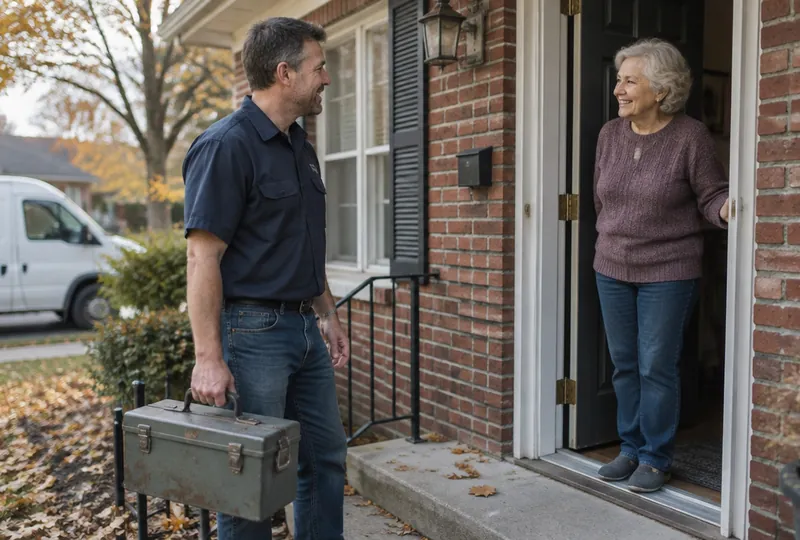
You're rolling up the last drop cloth. The customer walks the hallway one more time, runs a hand along the trim and says, "This looks amazing. I'm telling everybody about you."
She means it. Then she goes back to her week, and the neighbor who needs a painter never hears your name.
Referrals work better when you ask for them. Here's how to do it by text without sounding like a salesman.
Why you have to ask
A recommendation from a friend is the strongest marketing there is. In Nielsen's 2021 Trust in Advertising study, 88% of people said they trust recommendations from people they know more than any other channel.1
Online reviews matter too, but they haven't replaced a friend's word. In BrightLocal's 2025 survey, 42% of consumers said they trust reviews as much as a personal recommendation, down from 79% in 2020.2
So your happy customers are holding the best advertising you'll ever get, and most aren't using it. They're busy. A text puts your number in their phone with a reason to pass it on.
When to send it
Send it the same day you finish, while the work is fresh and they're still looking at it.
Good moments:
- Right after they say thanks, in person or by text.
- After the final walkthrough, once the invoice is settled.
- After a compliment weeks later. "The AC got us through that heat wave" is an open door.
Bad moments: while there's a problem you haven't fixed, or in the same text as the bill.
Texts 1 to 3: the ask after the job
Swap in your own details wherever you see brackets.
Thanks again, [Name]. It was a pleasure working on your [project]. If a neighbor or friend ever needs [service], feel free to pass along this number. We'd take good care of them.
Hi [Name], it's [Your Name]. Thanks for having me out today. Most of my work comes from customers telling a friend, so if you know anyone who needs [service], I'd be grateful if you sent them my way.
Number 2 is for the one-truck shop.
That means a lot, [Name], thank you. If anyone you know ever needs [service], we'd love to help them too. Feel free to share this number.
None of these ends with a question, so the customer doesn't owe you a reply.
Text 4: give them something to forward
To refer you, your customer has to remember your name, find your number and explain what you do. Do that work for them.
Hi [Name], here's something you can forward if a friend ever asks who did your [project]: "[Business Name] did our [project] and we were really happy with it. Their number is [phone], and you can see their work at [website link]."
Don't ask for the friend's phone number so you can text them yourself. That friend never asked to hear from you. CTIA, the wireless carriers' trade group, says messages should be sent only after the consumer has opted in to receive them, and that one person's opt-in shouldn't be transferred to another sender.3 Let your customer do the introducing.
Text 5: past customers you haven't talked to in a while
You don't need a fresh job to ask. A customer from last spring still remembers you.
Hi [Name], it's [Your Name] with [Business Name]. Just checking that the [project] we did last [season] is holding up well. If you ever need anything, or know someone who needs [service], we're a text away.
Send this one by hand, a few at a time, to people you actually remember. And mean the check-in. If something isn't holding up, you want to hear it before their neighbors do.
Texts 6 and 7: say thank you when it works
When a new caller says "Dana gave me your number," text Dana that day.
Hi [Name], [Friend's Name] just called us about their [project]. Thank you for sending them our way. It means a lot that you'd put your name next to ours.
Send it whether or not you get the job.
If you want to add a small thank-you, do it after the fact:
Hi [Name], thanks again for sending [Friend's Name] to us. We finished their [project] last week. We'd like to say thanks with [gift card / credit toward your next service]. What's the best way to get it to you?
Should you offer a reward?
You can, but you don't have to. A handwritten card or a small gift card after the job does plenty. A few things to keep straight:
- A referral reward is not a review reward. Google's policy says businesses may not offer incentives, such as payment, discounts, or free goods or services, in exchange for posting a review.4 The FTC also says you can't condition an incentive, like a discount, on a review being positive.5 Thank people for sending you customers. Never pay for stars.
- If you hold a license, ask your state board first whether it has rules about referral rewards in your trade.
When you do want reviews, ask for them separately. We covered that in how to get more Google reviews without being pushy.
The rules, in plain English
One text, typed by you, to a customer you just did work for is a conversation. A blast to your whole customer list is marketing, and marketing texts need permission first.3
If anyone asks you to stop texting, stop.
We're not lawyers, and texting rules change. Before you send anything to a list, check with your phone provider or an attorney.
Be ready when the friend calls
The friend will look you up first, which is why it pays to have a website even when your work comes from word of mouth.
Then they'll dial. If you're on a ladder, make sure they get a fast text back. We wrote ten missed-call texts you can copy for that moment.
The bottom line
Your best customers already want to recommend you. They need a nudge and something to forward.
Pick one text from this page, save it in your phone's notes and send it after your next finished job. When a friend of theirs calls, say thank you.
Frequently asked questions
Isn't it awkward to ask for referrals?
It's awkward when it sounds like a sales pitch. It isn't when it sounds like you: a thank-you, one line saying you'd be glad to help anyone they know, and nothing they have to answer. Most happy customers are glad to do it. They just never think of it unless you ask.
Should I ask for a referral and a review in the same text?
No. Two asks in one text usually get you neither. Send them a few days apart. Which one goes first matters less than each text asking for one thing.
Should I ask my customer for their friend's phone number?
We wouldn't. Their friend never asked to hear from you, and a text from a stranger about their roof feels like spam. Give your customer something to forward and let the friend reach out when they're ready.
Do I need to offer a reward to get referrals?
No. Good work and a plain ask do most of it. A small thank-you after the fact is a nice touch, but the ask matters more than the gift.
Sources
- Nielsen (2021). Beyond martech: building trust with consumers and engaging where sentiment is high. 2021 Trust in Advertising Study. nielsen.com
- BrightLocal (2025). Local Consumer Review Survey. brightlocal.com
- CTIA (2023). Messaging Principles and Best Practices. api.ctia.org
- Google Maps User Contributed Content Policy. Prohibited and restricted content: fake engagement. support.google.com
- Federal Trade Commission. FTC's Endorsement Guides: What People Are Asking. ftc.gov
Last updated
This article was drafted with AI assistance and edited by the AtlasBooked team, who checked its facts and sources before publishing.
Field Notes is the AtlasBooked team's plain-English guide for local trades: websites, missed calls, reviews and local search. Articles are drafted with AI assistance and edited by the AtlasBooked team before publishing. Sources are linked at the end of each article.