10 Missed-Call Texts You Can Copy
Ten missed-call texts you can copy and paste, for working hours, nights, weekends and emergencies, plus the simple rules that get customers to reply.


On this page
- What a good missed-call text has in it
- Texts 1 to 4: the everyday ones
- Texts 5 and 6: emergencies and full schedules
- Texts 7 to 9: the ones that sort the job for you
- Text 10: the one nudge
- Which one should you start with?
- The rules, in plain English
- The text buys you minutes, not the afternoon
- The bottom line
- FAQ
Quick answer
A good missed-call text does three things: it says who you are, it says why you didn't pick up, and it asks one easy question. Something like: "Hi, this is [Business Name]. Sorry we missed your call, we're on a job. What can we help you with?" Below are ten versions you can copy, for working hours, nights, weekends, emergencies and the weeks you're booked solid.
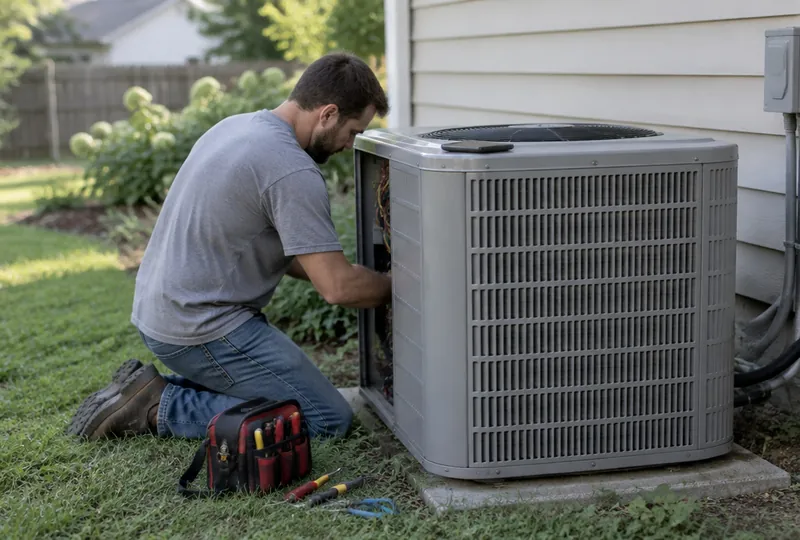
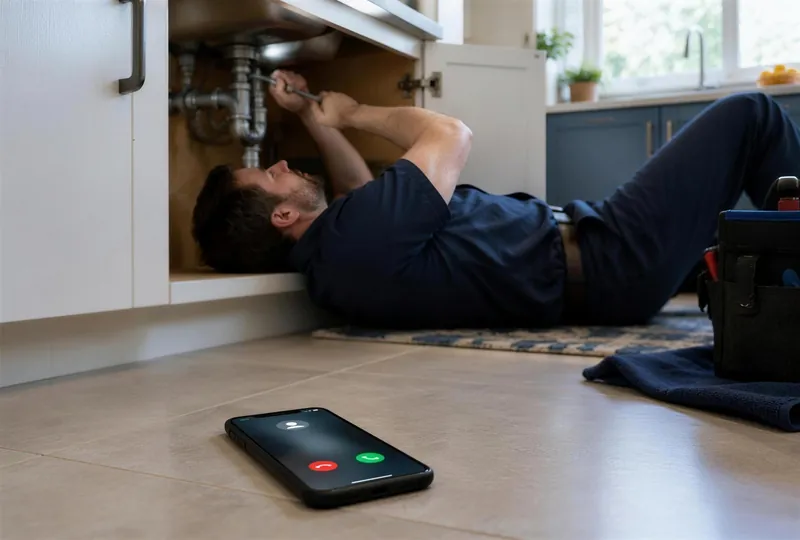
You're twelve feet up a ladder with a bundle of shingles on your shoulder. Your phone buzzes in your pocket. You are not answering that, and you shouldn't.
The text that goes out in your place is what decides whether that caller waits for you or dials the next roofer. Here are ten you can copy, and how to pick the right one.
What a good missed-call text has in it
Every text on this page is built from the same three parts:
- Your business name. They called three companies. Tell them which one this is.
- A short, honest reason. "We're on a job" works. It tells them you're busy because people hire you.
- One question. A question gets an answer. "We'll call you back soon" gets nothing.
It works because most callers won't leave you a voicemail. In one small business call report, 69% of callers who reached voicemail hung up without leaving a message.1 But nearly all of them can read a text: Pew Research found that 91% of U.S. adults own a smartphone.2
Texts 1 to 4: the everyday ones
Swap in your own details wherever you see brackets.
Hi, this is [Business Name]. Sorry we missed your call, we're on a job right now. What can we help you with?
Hi, it's [Your Name] with [Business Name]. I'm on a ladder at the moment and couldn't pick up. What's going on at your place?
Number 2 is for the one-truck shop.
Hi, this is [Business Name]. We've wrapped up for the day, but we saw your call. Text us what you need and we'll get back to you by [time] tomorrow morning.
Hi, this is [Business Name]. We're closed until [day], but we don't want to lose you. Tell us what you need and you'll be the first call we make [day] morning.
Give a real time in numbers 3 and 4, and then keep it. "By 8 tomorrow" is a promise a customer will wait on. "Soon" isn't.
Texts 5 and 6: emergencies and full schedules
Hi, this is [Business Name]. Sorry we missed you. If you have water or sewage coming in or no heat, reply URGENT and we'll call you right back. If it can wait, tell us what's going on.
Only send number 5 if someone really will call back in minutes. If nobody is on call tonight, use number 3.
Hi, this is [Business Name]. Sorry we missed your call. We're booked through [day], so the soonest we could get to you is [day]. Does that work, or is this urgent?
Texts 7 to 9: the ones that sort the job for you
Hi, this is [Business Name]. Sorry we missed you, we're on a job. Can you text a photo of the problem and your zip code? That way we can give you a real answer when we call.
A photo of the water heater label or the ceiling stain can save you a trip.
Hi, this is [Business Name]. Sorry we missed your call. Are you looking for an estimate? Send the address and a good day to stop by, and we'll get you on the schedule.
That's for roofers, painters and remodelers, where nearly every new call is someone asking for a number.
Hi, this is [Business Name]. Sorry we missed you. What town are you in, and what do you need done? We'll let you know right away if we can help.
Use number 9 if you get a lot of calls from an hour away.
Text 10: the one nudge
The first nine go out on their own. This one you send yourself, once, later that day, if they haven't answered and you couldn't reach them by phone.
Hi, [Business Name] again. Just making sure you got taken care of. If you still need a hand with that, we have an opening [day]. If you already found someone, no worries.
One nudge, not three.
Which one should you start with?
Don't set up all ten. Pick two:
- One for working hours. Number 1 for most shops, number 2 if it's just you, number 8 if you sell by estimate.
- One for after hours. Number 3, or number 5 if you take emergency calls at night.
Add the others when you need them. Number 6 goes on the week you get slammed and comes off when you catch up.
Whatever you pick, leave out the sales pitch. No coupons, no "ask about our fall special." They called with a problem, so talk about the problem.
The rules, in plain English
A missed-call text is a reply to somebody who just called you. Keep it that way.
Don't use those numbers for promotions unless the person said yes to that. And when someone tells you to stop, stop. CTIA, the wireless carriers' trade group, says senders should honor the standard STOP reply and also plain-language requests like "end," "cancel," "unsubscribe" and "quit."3
We're not lawyers, and texting rules change. Before you do more than answer the people who call you, check with your phone provider or an attorney.
The text buys you minutes, not the afternoon
The automatic text doesn't book the job. You do, when you reply. A Harvard Business Review study of online sales leads found that companies who reached out within an hour were nearly 7 times as likely to have a real conversation with the buyer as those who waited even an hour longer.4 Those were web leads, not calls to a plumber, but the point holds: answer at your next break, not at the end of the day.
For what a missed call costs, read what happens when you miss a call from a new customer. Deciding between this and paying someone to pick up? See answering service vs. missed-call text back. And if you buy leads, the same fast reply wins there too: are paid leads worth it?
The bottom line
You can't answer the phone on a roof. You can make sure every caller hears from you before they've finished searching for someone else.
Pick one text for the day and one for the night. Put your business name in it, ask one question, and reply when you climb down.
Frequently asked questions
How long should a missed-call text be?
Two sentences, three at most. Your business name, a short reason you missed them, and one question. If it takes more than a glance to read, people skip it.
Should I put a price or a link in the text?
Not in the first one. A price before you know the job is a guess, and a link in a text from a number they don't know can look like spam. Get the reply first, then send whatever they need.
Can I add people who called me to my promotional texts?
Not without their permission. A missed-call text is a reply to their call, and it should stay about that call. Marketing texts have their own consent rules, so ask your phone provider or an attorney before you send any.
What if they don't text back?
Call them when your hands are free, the same as you would have anyway. If you still can't reach them, one follow-up text later that day is fine. After that, let it go.
Sources
- Moneypenny. Small business call report. moneypenny.com
- Pew Research Center (2025). Mobile Fact Sheet. pewresearch.org
- CTIA (2023). Messaging Principles and Best Practices. api.ctia.org
- Oldroyd, J. B., McElheran, K., & Elkington, D. (2011). The Short Life of Online Sales Leads. Harvard Business Review. hbr.org
Last updated
This article was drafted with AI assistance and edited by the AtlasBooked team, who checked its facts and sources before publishing.
Field Notes is the AtlasBooked team's plain-English guide for local trades: websites, missed calls, reviews and local search. Articles are drafted with AI assistance and edited by the AtlasBooked team before publishing. Sources are linked at the end of each article.