How Fast Do You Have to Call a Lead Back?
Inside the hour, and sooner when you can. Why the first hour decides who gets the job, what to do when you're on a ladder, and texts to send right away.


On this page
- The short answer: inside the hour
- Why the first hour matters so much
- Most businesses are slower than they think
- Not every lead runs on the same clock
- What to do when you're on a job
- Set callback windows, not good intentions
- If you pay for leads, slow costs you twice
- What to say when you call back
- The bottom line
- FAQ
Quick answer
Call a new lead back within the hour, and within minutes if you can. In a Harvard Business Review study of 1.25 million sales leads, companies that tried to reach a lead within an hour were nearly 7 times as likely to have a real conversation with the decision maker as those that waited even an hour longer. You won't always be free, so send a short text right away and make the real call at your next break, not at the end of the day.
A homeowner fills out the form on your website at 9:40 in the morning. Their AC quit overnight. You see the notification at lunch, but you're mid-install, so you figure you'll call after the job.
You call at 5:15. "Oh, thanks, somebody came out this afternoon."
Nobody did anything wrong. You were working. But the job went to whoever called first.
The short answer: inside the hour
Call a new lead back within the hour. Within a few minutes is better. And if you can't make a real call that fast, send a text right away and call at your next break.
That's the whole rule. The rest of this post is why it matters, and how to hit it when you're on a ladder.
Why the first hour matters so much
The best-known research on this comes from a Harvard Business Review study of 1.25 million sales leads at U.S. companies.1 Companies that tried to contact a lead within an hour were nearly 7 times as likely to have a real conversation with the decision maker as companies that tried even an hour later.1 Compared with companies that waited 24 hours or more, they were more than 60 times as likely.1
Those were online leads across lots of industries, not just trades. But think about what a homeowner does after they reach out. They don't sit and wait for you. They keep searching. They call the next name. Every hour you wait, the odds go up that someone else is already in the driveway.
Most businesses are slower than they think
Here's the good news: the bar is low.
In the same research, the authors sent a test lead through the websites of 2,241 U.S. companies and timed the replies.1 Only 37% responded within an hour.1 24% took more than a day, and 23% never responded at all.1 Among the companies that did reply within 30 days, the average wait was 42 hours.1
Forty-two hours. For a leaking water heater.
So you don't need a call center to stand out. You need to answer faster than the outfit that calls back "when I get a chance."
Not every lead runs on the same clock
Some leads need you in minutes. Some can wait until lunch. Here's how we'd sort them:
| Lead | How fast | Why |
|---|---|---|
| Emergency call (leak, no heat, no power) | Minutes | They're calling down the list until someone answers |
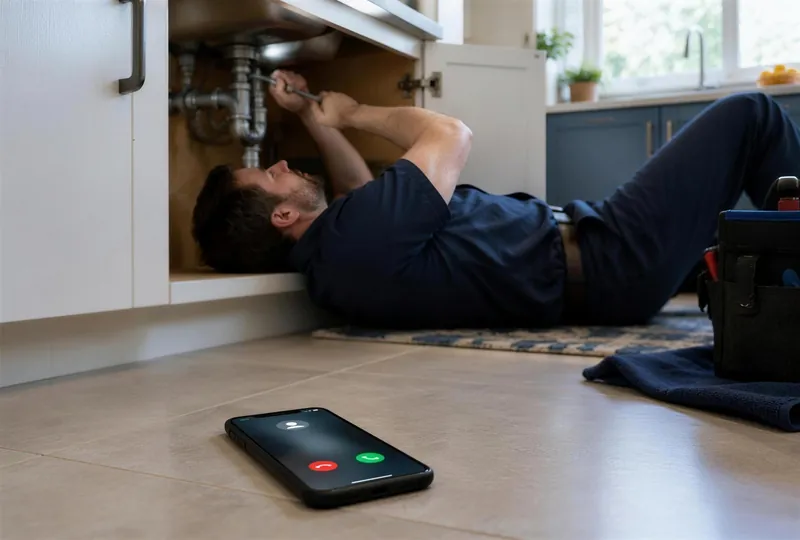
| Missed call | Text in seconds, call at your next break | Most won't leave a voicemail |
| Voicemail | Before anything else on the list | They made the effort. Reward it |
| Website form or quote request | Within the hour, during work hours | They're filling out other forms too |
| Paid or shared lead | Right away | The same lead went to other businesses |
| After hours | Auto-reply now, call before your first job | First call in the morning wins |
That missed call row is the one that hurts. In a small business call report, 69% of callers who reached voicemail didn't leave a message.2 A missed call with no message isn't a slow lead. It's a lead that's already dialing someone else. We broke that down in what happens when you miss a call from a new customer.
What to do when you're on a job
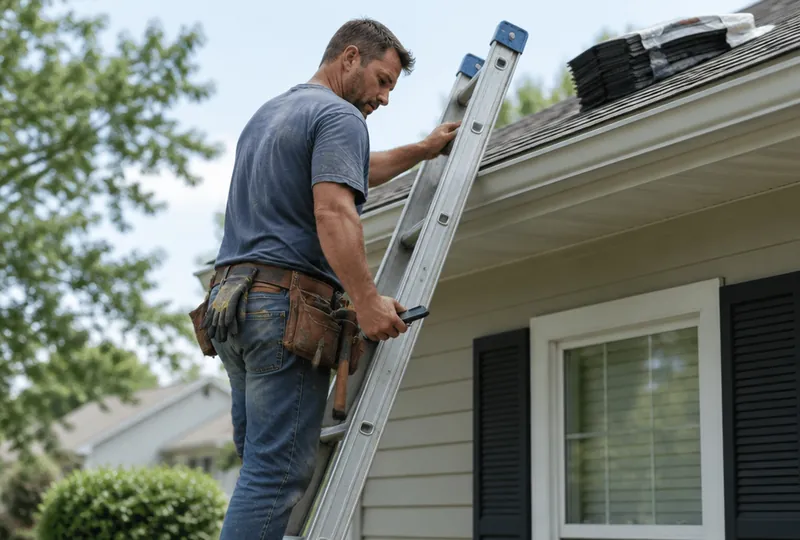
You can't climb off a roof every time the phone buzzes. You shouldn't have to. The fix is two steps.
Step one: a text, right away. It tells them you're real, you got it, and when you'll call. That buys you time without losing them.
Hi [Name], this is [Your Name] with [Business Name]. Got your message about the [job]. I'm on a job until about [time] and I'll call you then. If it's urgent, reply URGENT.
Step two: the real call, at your next break. Not at the end of the day. The next time your hands are free.
If they don't pick up, don't just leave a voicemail and hope. Send a text that gives them something to say yes to.
Hi [Name], just tried you about the [job]. I can come take a look [day] between [time] and [time]. Does that work? You can reply right here.
Morning [Name], following up on the [job]. If you still need it done, I have an opening [day]. If you already found someone, no problem at all.
If the first text can go out automatically the second a call is missed, even better. We have 10 missed-call texts you can copy for exactly that.
Set callback windows, not good intentions
"I'll call them when I can" turns into 6pm almost every time. The jobs run long. The supply house takes forever. The day gets away.
So pick fixed times and stick to them:
- Before the first job. Clear anything that came in overnight.
- Lunch. Every lead from the morning gets a call.
- Between jobs. Two minutes in the truck before you pull out.
- Before you leave the last driveway. Nothing waits until tomorrow without at least a text.
And check every place a lead can land: missed calls, voicemail, texts, the website form, email, and any lead app you pay for. A lead sitting in an inbox you forgot to check is the slowest lead of all.
If you pay for leads, slow costs you twice
When you're buying leads, slow callbacks don't just lose the job. They can cost you money you already spent.
Google's Local Services Ads are a good example. Google says your average response time is part of your profile quality, which helps decide where your ad shows.3 It also says missed calls may hurt your responsiveness.3 And a missed call during your business hours can still count as a charged lead if the customer stays on the line for more than 20 seconds.4
Shared leads from the big lead sites work the same way: the same request goes to several businesses, and the first useful reply usually gets the visit. If that's how you get work, read are paid leads worth it before you buy more.
What to say when you call back
Speed gets you the conversation. The callback still has to book the job.
- Use their name and the job. "Hi Maria, it's Dave with Lakeside Heating, calling about your AC." They know it's not a robocall.
- Ask one or two questions. What's it doing, how old is it, is anyone without heat or water.
- Offer a time. "I can be there tomorrow between 8 and 10" books more than "so when works for you?"
- Confirm by text. Day, time window, your name. Then they have it in writing and your number saved.
The bottom line
Call new leads back inside the hour, and sooner if they're dealing with an emergency. When you can't, text right away and call at your next break.
You don't have to be the best-known business in town to win the job. A lot of the time, you just have to be the first one who called back.
Frequently asked questions
Should I call or text a new lead back?
Both, in that order of speed. A text goes out in seconds and tells them you're real and you're coming. The call is where you set the appointment, so make it at your next break. If they don't pick up, follow with a text that offers a time.
Is it pushy to call someone back within a few minutes?
No. They just asked you for help. A fast callback reads as organized, not desperate. Pushy is calling five times in a day, so make one good attempt, leave a text, and give them room.
How many times should I try before I give up?
We'd try a call and a text the same day, then one more call or text the next morning. After that, send one last short text saying the door's open, and stop. Anyone who still needs the work will reply to that.
What about leads that come in at night or on the weekend?
Send an automatic reply right away that says when you'll call. Then call first thing, before you start your first job. A lead that's been waiting all night is the one most likely to call someone else at 7am.
What if I call back and they already hired someone?
Thank them, wish them luck, and ask if you can text them your number for next time. It happens to everybody. If it happens a lot, that's the sign your callbacks are landing too late.
Sources
- Oldroyd, J. B., McElheran, K., & Elkington, D. (2011). The Short Life of Online Sales Leads. Harvard Business Review. hbr.org
- Moneypenny (2016). Findings of small business call report revealed. moneypenny.com
- Local Services Help. About ad rankings. support.google.com
- Local Services Help. How leads work. support.google.com
Last updated
This article was drafted with AI assistance and edited by the AtlasBooked team, who checked its facts and sources before publishing.
Field Notes is the AtlasBooked team's plain-English guide for local trades: websites, missed calls, reviews and local search. Articles are drafted with AI assistance and edited by the AtlasBooked team before publishing. Sources are linked at the end of each article.